Does Faster Internet Lower Your Ping? Exploring the Connection
In the realm of online gaming, one metric holds significant importance: ping. For gamers, achieving the lowest ping possible is often synonymous with better performance and a competitive edge. But does upgrading to faster internet truly result in a lower ping? Let’s delve into this question to uncover the relationship between internet speed and ping.
Read more:
- Significance of Ping in Gaming: A Comprehensive Guide
- What is ping and how does it impact professional gaming?
- Understanding the Importance of Ping Speed for Websites and Gaming
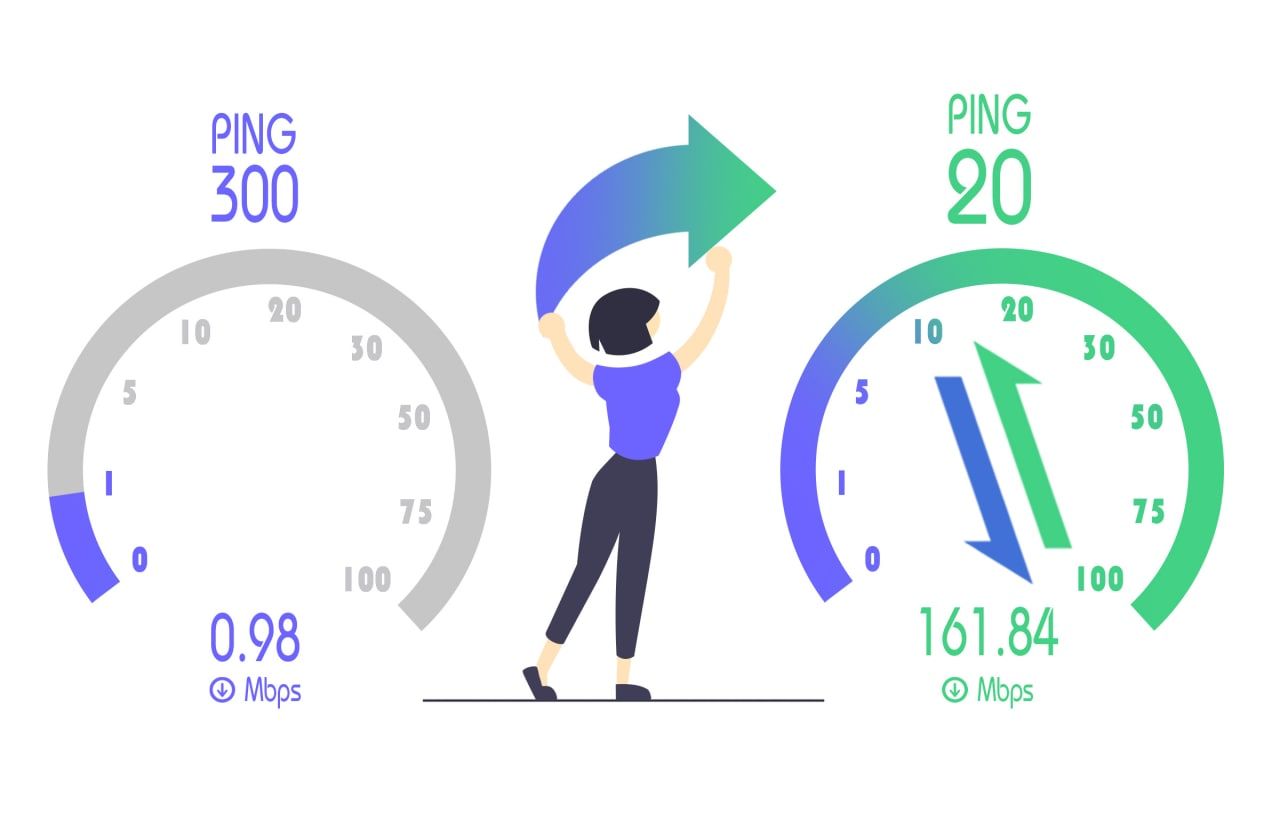
Understanding Ping: Before delving into the correlation between internet speed and ping, it’s crucial to grasp what ping actually represents. Ping, measured in milliseconds (ms), is the time it takes for data to travel from your device to a server and back again. In essence, it reflects the responsiveness of your connection—the lower the ping, the quicker the data transmission, leading to smoother gameplay experiences.
The Impact of Internet Speed: One might assume that faster internet invariably equates to lower ping times. After all, faster speeds should theoretically facilitate swifter data transfer, resulting in reduced latency, right? While this logic holds true to some extent, the reality is slightly more nuanced.
Factors Influencing Ping: Several factors influence ping, with internet speed being just one piece of the puzzle. Other variables, such as network congestion, server distance, and routing efficiency, also play pivotal roles in determining ping times. Even with lightning-fast internet, if data must traverse a convoluted network path or contend with congested nodes, ping times can still be higher than expected.
The Role of Infrastructure: Furthermore, the infrastructure supporting your internet connection—whether it's fiber optic, cable, DSL, or wireless—can impact ping times differently. Fiber optic connections, known for their low latency and high-speed capabilities, generally offer superior ping performance compared to traditional DSL or wireless connections.
Optimizing Ping Performance: While upgrading to faster internet can indeed help lower ping times, it’s not a guaranteed fix-all solution. Gamers keen on optimizing their ping should consider a holistic approach, including:
- Choosing the Right Provider: Selecting an internet service provider (ISP) known for reliable connections and minimal latency can make a substantial difference.
- Optimizing Network Settings: Fine-tuning router settings, prioritizing gaming traffic, and utilizing Quality of Service (QoS) features can help reduce ping fluctuations.
- Server Selection: Opting for gaming servers closer to your geographical location can minimize latency and enhance overall gaming experiences.
- Hardware Upgrades: Investing in high-quality networking hardware, such as gaming routers and Ethernet cables, can contribute to smoother gameplay by reducing packet loss and latency.
In Conclusion: While faster internet can contribute to lower ping times, it’s just one piece of the puzzle. Various factors, including network infrastructure, server proximity, and optimization techniques, collectively influence ping performance. By understanding these dynamics and implementing targeted strategies, gamers can strive to achieve optimal ping for immersive and responsive gaming experiences.
Read more: https://gospeedcheck.com/article/what-is-a-good-ping-test-result-65

0 comments:
Post a Comment