Does Faster Internet Lower Your Ping? Exploring the Connection
In the realm of online gaming, one metric holds significant importance: ping. For gamers, achieving the lowest ping possible is often synonymous with better performance and a competitive edge. But does upgrading to faster internet truly result in a lower ping? Let’s delve into this question to uncover the relationship between internet speed and ping.
Read more:
- Significance of Ping in Gaming: A Comprehensive Guide
- What is ping and how does it impact professional gaming?
- Understanding the Importance of Ping Speed for Websites and Gaming
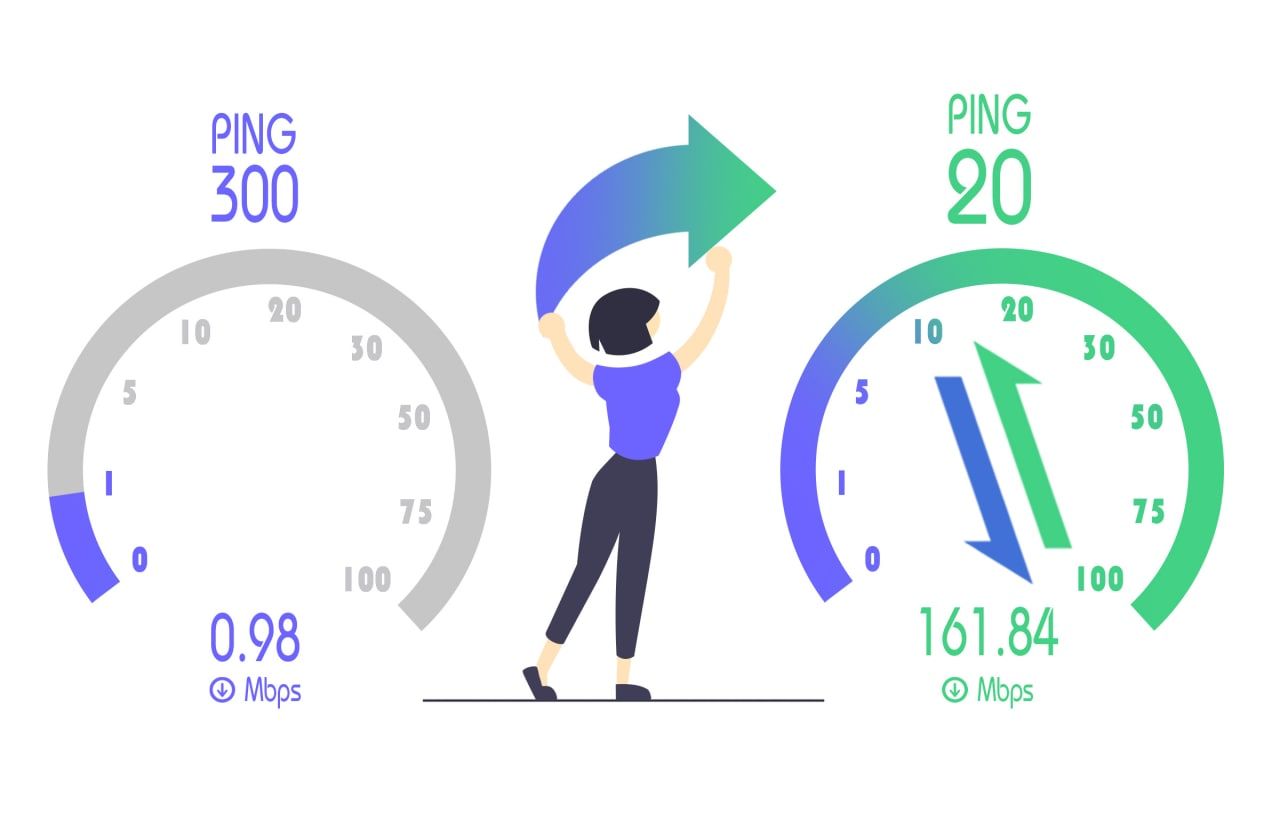
Understanding Ping: Before delving into the correlation between internet speed and ping, it’s crucial to grasp what ping actually represents. Ping, measured in milliseconds (ms), is the time it takes for data to travel from your device to a server and back again. In essence, it reflects the responsiveness of your connection—the lower the ping, the quicker the data transmission, leading to smoother gameplay experiences.
The Impact of Internet Speed: One might assume that faster internet invariably equates to lower ping times. After all, faster speeds should theoretically facilitate swifter data transfer, resulting in reduced latency, right? While this logic holds true to some extent, the reality is slightly more nuanced.
Factors Influencing Ping: Several factors influence ping, with internet speed being just one piece of the puzzle. Other variables, such as network congestion, server distance, and routing efficiency, also play pivotal roles in determining ping times. Even with lightning-fast internet, if data must traverse a convoluted network path or contend with congested nodes, ping times can still be higher than expected.
The Role of Infrastructure: Furthermore, the infrastructure supporting your internet connection—whether it's fiber optic, cable, DSL, or wireless—can impact ping times differently. Fiber optic connections, known for their low latency and high-speed capabilities, generally offer superior ping performance compared to traditional DSL or wireless connections.
Optimizing Ping Performance: While upgrading to faster internet can indeed help lower ping times, it’s not a guaranteed fix-all solution. Gamers keen on optimizing their ping should consider a holistic approach, including:
- Choosing the Right Provider: Selecting an internet service provider (ISP) known for reliable connections and minimal latency can make a substantial difference.
- Optimizing Network Settings: Fine-tuning router settings, prioritizing gaming traffic, and utilizing Quality of Service (QoS) features can help reduce ping fluctuations.
- Server Selection: Opting for gaming servers closer to your geographical location can minimize latency and enhance overall gaming experiences.
- Hardware Upgrades: Investing in high-quality networking hardware, such as gaming routers and Ethernet cables, can contribute to smoother gameplay by reducing packet loss and latency.
In Conclusion: While faster internet can contribute to lower ping times, it’s just one piece of the puzzle. Various factors, including network infrastructure, server proximity, and optimization techniques, collectively influence ping performance. By understanding these dynamics and implementing targeted strategies, gamers can strive to achieve optimal ping for immersive and responsive gaming experiences.
Read more: https://gospeedcheck.com/article/what-is-a-good-ping-test-result-65
What is ping and how does it impact professional gaming?
In the realm of professional gaming, where split-second decisions can make or break a match, the significance of ping cannot be overstated. As gamers strive for peak performance, understanding what ping is and its profound impact on gameplay becomes paramount.
Read more:
- Significance of Ping in Gaming: A Comprehensive Guide
- Understanding the Importance of Ping Speed for Websites and Gaming

What is Ping?
In the digital universe of gaming, "ping" refers to the time it takes for data to travel from a player's device (usually a computer or console) to the game server and back again. It's essentially the measurement of latency or lag, typically expressed in milliseconds (ms). A low ping indicates a shorter delay, resulting in smoother, more responsive gameplay, while a high ping signifies delays that can disrupt the gaming experience.
The Impact on Professional Gaming
1. Responsiveness:
In professional gaming, every millisecond counts. A low ping ensures that actions are executed swiftly, enabling players to react instantly to in-game events. This responsiveness is crucial in fast-paced competitive environments, where split-second decisions determine victory or defeat.
2. Competitive Advantage:
A lower ping provides a competitive edge by reducing the delay between player input and its effect in the game world. This advantage is particularly pronounced in genres like first-person shooters (FPS) and real-time strategy (RTS) games, where precision and timing are paramount.
3. Consistency:
Consistency is key in professional gaming. A stable, low ping ensures that gameplay remains smooth and predictable, allowing players to maintain their focus and execute strategies without interruptions or unexpected delays.
4. Fairness:
High ping can lead to disparities in gameplay experiences among competitors. In esports tournaments, where fairness is essential, efforts are made to minimize ping differentials to ensure a level playing field for all participants.
Managing Ping for Optimal Performance
1. Choosing the Right Server:
Selecting game servers geographically closer to your location can significantly reduce ping. This strategic choice minimizes the distance data needs to travel, resulting in lower latency and a smoother gaming experience.
2. Optimizing Network Settings:
Tweaking network settings, such as prioritizing gaming traffic and minimizing background processes, can help reduce ping and improve overall performance. Additionally, using a wired connection instead of Wi-Fi can further enhance stability and reduce latency.
3. Investing in Quality Hardware:
High-performance hardware, including gaming routers, network adapters, and Ethernet cables, can contribute to lower ping and improved responsiveness. Investing in reliable equipment tailored for gaming can yield significant improvements in latency-sensitive scenarios.
4. Regular Network Maintenance:
Conducting routine network maintenance, such as updating firmware, clearing cache, and monitoring for bandwidth congestion, ensures optimal performance and reduces the likelihood of ping-related issues during gameplay.
Conclusion
In the competitive landscape of professional gaming, where split-second reactions and precise execution are paramount, understanding and managing ping is essential. By comprehending its significance and implementing strategies to mitigate latency, players can optimize their performance, maintain a competitive edge, and elevate their gaming prowess to new heights.
Read: https://gospeedcheck.com/article/what-is-a-good-ping-test-result-65
What is ping and how does it impact professional gaming?
Significance of Ping in Gaming: A Comprehensive Guide
In the dynamic world of online gaming, where split-second reactions can mean the difference between victory and defeat, the significance of ping cannot be overstated. Ping, often overlooked by casual gamers, plays a pivotal role in determining the smoothness of gameplay and overall gaming experience. This article delves into the intricacies of ping in gaming, its importance, and how it influences various aspects of online gameplay.Read more:

What is Ping? Ping, measured in milliseconds (ms), represents the time it takes for data packets to travel from the gamer's device to the game server and back. Essentially, it reflects the latency or delay in communication between the player's device and the server hosting the game.
Importance of Low Ping: Low ping is synonymous with seamless gameplay. It ensures minimal delay between the player's actions and their reflection in the game environment. Gamers with low ping enjoy responsive controls, fluid movements, and immersive experiences, giving them a competitive edge in fast-paced games.
Effects of High Ping: Conversely, high ping introduces noticeable delays, commonly known as "lag," which can significantly impair gameplay. Actions may register with a noticeable delay, leading to instances of rubber-banding, teleportation, or even disconnections from the game server. High ping not only disrupts the player's immersion but also puts them at a disadvantage during critical moments of gameplay.
Factors Influencing Ping: Several factors contribute to an individual's ping during online gaming:Internet Connection: The quality and stability of the internet connection directly impact ping. A faster and more stable connection typically results in lower ping.
Distance to Server: The physical distance between the player and the game server affects ping. Players closer to the server generally experience lower ping compared to those farther away.
Network Congestion: Heavy internet traffic or congestion can increase ping as data packets take longer to reach their destination amidst competing traffic.
Hardware and Software: The performance of the player's hardware (e.g., PC, console, router) and software (e.g., operating system, background applications) can influence ping.
Optimizing Ping for Gaming: To enhance the gaming experience, gamers can undertake various measures to optimize their ping:Choose the Right Server: Selecting a game server closest to your geographical location can minimize ping and improve responsiveness.
Upgrade Internet Connection: Upgrading to a higher-speed internet connection or opting for a wired connection over Wi-Fi can reduce ping and enhance stability.
Limit Background Activities: Closing unnecessary background applications and devices consuming bandwidth can free up resources, reducing ping.
Use Quality Hardware: Investing in quality gaming hardware, such as routers optimized for gaming or gaming-specific network adapters, can help reduce latency.
Regular Maintenance: Performing routine maintenance tasks, such as clearing cache, updating drivers, and resetting network settings, can optimize ping performance.
Conclusion: In the realm of online gaming, where precision and responsiveness reign supreme, understanding the significance of ping is paramount. Whether you're engaged in intense multiplayer battles or exploring vast virtual worlds, optimizing your ping can elevate your gaming experience to new heights. By implementing the right strategies and staying mindful of factors influencing ping, gamers can ensure smoother gameplay, fewer frustrations, and ultimately, more victories.
Significance of Ping in Gaming: A Comprehensive Guide
Understanding the Importance of Ping Speed for Websites and Gaming
In the digital realm, the term "ping" holds significant weight, especially for both website performance and gaming experiences. But what exactly constitutes a good ping, and why does it matter? In this comprehensive guide, we'll delve into the intricacies of ping speed and its profound impact on web browsing and gaming.

What is Ping?
Before delving into its significance, let's grasp the fundamentals. Ping is a network utility that measures the round-trip time for data packets sent from your device to a server and back again. Essentially, it's a measure of latency, indicating how quickly data travels between your device and a server on the internet.
What is a Good Ping?
A good ping is characterized by low latency, meaning the round-trip time is minimal. Generally, a ping of 20 milliseconds (ms) or less is considered excellent, while anything below 50 ms is still acceptable for most online activities. However, for competitive gaming or real-time applications, such as online gaming and video conferencing, aiming for pings below 20 ms is ideal to ensure seamless and responsive interactions.
Why Does Ping Speed Matter for Websites?
In the realm of website performance, ping speed plays a crucial role in determining how quickly web pages load and respond to user interactions. When a user accesses a website, their device sends requests to the website's server, and the server responds by delivering the requested content. A lower ping ensures that these requests and responses happen swiftly, resulting in faster page load times and a smoother browsing experience.
Furthermore, search engines like Google consider website speed as a ranking factor. Websites with faster load times often rank higher in search results, leading to increased visibility and traffic. Therefore, optimizing ping speed contributes not only to user satisfaction but also to enhancing a website's search engine optimization (SEO) performance.
Why Does Ping Speed Matter for Gaming?
In the realm of gaming, especially multiplayer and online gaming, ping speed can make or break the experience. Low latency is paramount for ensuring responsive gameplay, where split-second reactions can determine victory or defeat. A high ping can result in delayed actions, laggy gameplay, and frustrating user experiences, ultimately detracting from the enjoyment of the game.
Moreover, competitive gaming environments demand lightning-fast reactions and precise timing, making low ping essential for maintaining a competitive edge. Professional gamers often prioritize gaming on servers with the lowest ping possible to minimize latency and maximize performance.
Conclusion
In conclusion, ping speed plays a pivotal role in both website performance and gaming experiences. Whether you're browsing the web or engaging in intense gaming sessions, aiming for a low ping is crucial for ensuring fast, responsive, and enjoyable interactions. By understanding the significance of ping speed and implementing strategies to optimize it, both website owners and gamers can enhance their online experiences and stay ahead in the digital landscape.
Understanding the Importance of Ping Speed for Websites and Gaming
Subscribe to:
Posts (Atom)